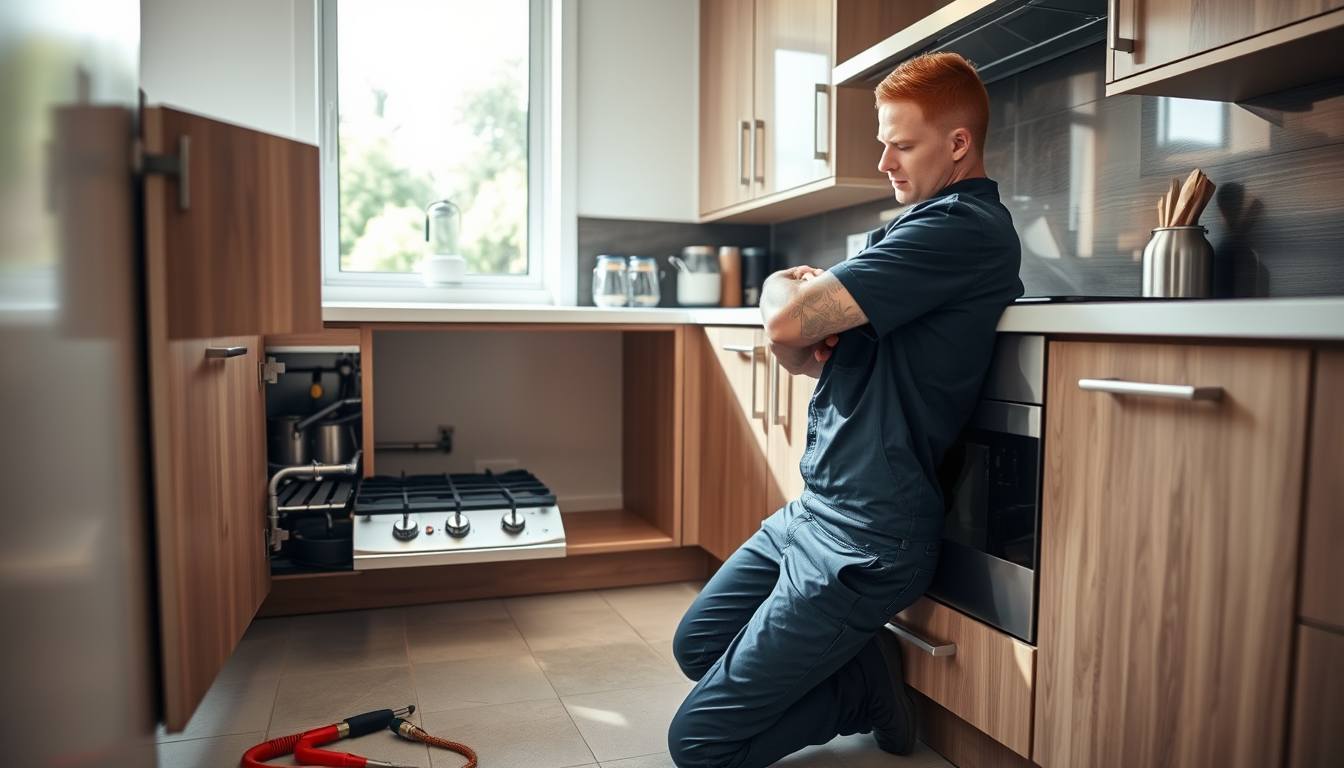
Picture a Saturday morning in Penrith. The new kitchen is nearly finished, the benchtop went in last week, and there's a shiny five-burner gas cooktop still sitting in its box by the back door. The temptation is obvious, four screws, one gas fitting, how hard can it really be? In New South Wales the honest answer is this: hard enough that doing it yourself is against the law, and gas cooktop installation is one of the few household jobs where those rules exist for a genuinely good reason.
We've been working kitchens and gas appliances across Penrith, Western Sydney and the Blue Mountains long enough to have seen what goes wrong when someone has a go themselves. Most of the time it isn't dramatic. It's a slow leak you can't smell at low concentrations, a fitting that was never tested, or a cooktop that runs rich and leaves soot on the pots. None of it is worth the few hundred dollars saved, and all of it is avoidable.
Why DIY Gas Cooktop Installation Is Illegal In NSW
Here's the plain version: in NSW, any work on a gas appliance or gas line has to be carried out by a licensed gas fitter. It's not a grey area and it's not about trades protecting their patch. Connecting a cooktop means working with the reticulated gas supply (or an LPG bottle), making a sealed joint that has to hold pressure, and leaving behind an appliance that burns a flammable fuel inside your home every day. NSW Fair Trading is clear that gas fitting is licensed work, and an unlicensed person doing it is breaking the law, whether that's the homeowner or a mate who's 'pretty handy'. You can read the licensing requirements straight from NSW Fair Trading at fairtrading.nsw.gov.au.
There's also the insurance angle people forget. If a DIY gas connection is involved in a fire or a leak, your home insurer is well within their rights to decline the claim because the work was done illegally. So the 'saving' can turn into the most expensive shortcut you'll ever take.
What A Licensed Install Actually Involves
When we come out to do a gas cooktop installation, it's more than connecting a hose and walking off. First we check the appliance against the space, cooktops have minimum clearances to overhead rangehoods and to combustible side walls, and we see plenty of Penrith kitchens where the cabinetmaker left no allowance for them. We confirm the gas type stamped on the appliance matches what's at the house. Natural gas and LPG run at different pressures and use different injectors, and a cooktop set up for one will not run safely on the other without a proper conversion.
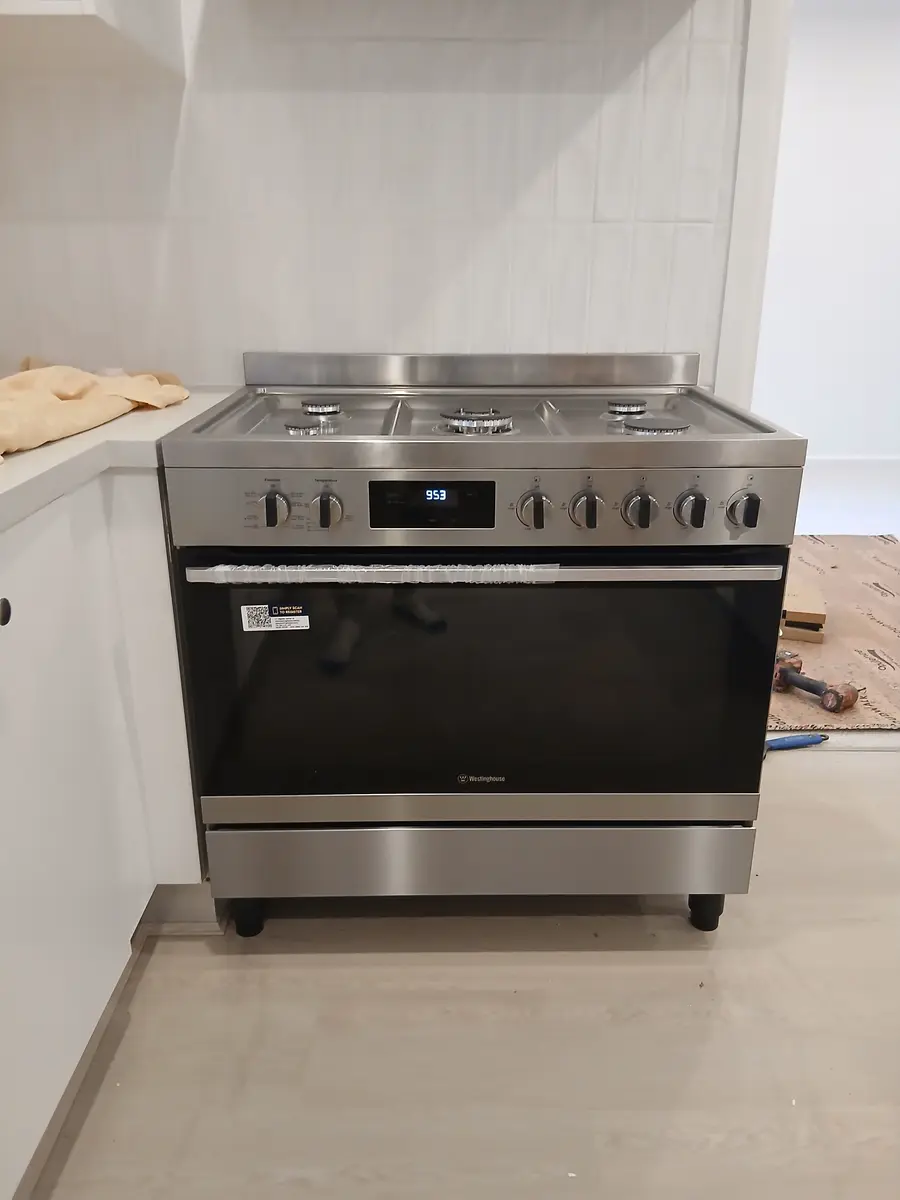
From there it's the physical work: isolating the supply, running or adapting the line to the right size so the burners actually get the flow they're rated for, making the connection with approved fittings, and fitting an isolation valve so the appliance can be shut off on its own. Then every joint gets leak-tested under pressure, not sprayed with a bit of soapy water and hoped for, but properly tested. Finally we light it off, check the flame picture on each burner, and make sure it's burning clean and stable. If you want a sense of the finished standard, there's a freestanding gas cooker job in our <a href="/gallery">gallery</a> that shows the kind of tidy, compliant connection you should expect.
The Compliance Certificate, And Why You Want One
This is the part homeowners don't always know to ask for. When a licensed gas fitter completes the work in NSW, you're entitled to a Gas Compliance Certificate (often called a Certificate of Compliance). It's a signed document stating the work was carried out to the relevant gas installation standard by a licensed person. Keep it with your house papers.
That certificate matters in three real situations: selling the house, making an insurance claim, and any future servicing. It's your proof that the cooktop was installed legally and tested. If a plumber or gas fitter ever does gas work at your place and doesn't mention a compliance certificate, that's a flag worth questioning. Our licensed <a href="/services/gas-fitting">gas fitting</a> work always includes it, it's not an optional extra, it's part of doing the job properly.
It's Rarely Just The Cooktop
Something we see regularly: the cooktop is the trigger, but the real job is the whole gas setup behind it. Older homes around Emu Plains and up through Springwood were often plumbed for a single gas appliance decades ago, and the existing line simply isn't sized for a modern five- or six-burner cooktop plus a gas oven and maybe a heater on the same supply. Starve the burners of flow and you get lazy yellow flames, poor cooking performance, and soot. Part of a proper assessment is checking the line can actually feed what you're asking of it before anyone commits to a connection.
The same logic applies to the appliances already in the house. If we're there for the cooktop, it's a sensible time to look over any other gas appliances, a quick read of our guide on a <a href="/blog/gas-heater-safety-check">gas heater safety check</a> explains why ageing heaters are the ones we worry about most heading into a Blue Mountains winter.
What It's Worth, Honestly
A straightforward cooktop swap where the gas point is already there and correctly sized is a relatively quick licensed job. The cost climbs when the line needs upsizing, when the connection point has to move to suit a new kitchen layout, or when an LPG-to-natural-gas conversion is involved. We'd always rather quote you off the actual situation than throw out a number that changes the moment we lift the benchtop. As a family-owned business working this area since 1996, we've found straight pricing earns more repeat work than a cheap-sounding quote that balloons on the day.
If you're weighing up a new kitchen or just replacing a tired old cooktop anywhere across Penrith and the Nepean, get a licensed gas fitter to look at it before you buy the appliance, the clearances and gas-type details are much cheaper to sort out before the cabinetry is locked in.
Get It Done Legally, Talk To Us
Edinburgh Plumbing Services is a licensed gas fitter (licence number 484292C) covering Penrith, Western Sydney and the Blue Mountains. For a smelled gas leak or anything urgent, call our 24/7 emergency line on 0449 505 191 straight away. For a cooktop quote or general enquiries, ring 0414 426 999 or head to our <a href="/contact">contact page</a> to Get a Free Quote. We'll do it properly, test it, and leave you with the compliance certificate to prove it.
Frequently asked questions
Can I legally install a gas cooktop myself in NSW?
No. In New South Wales all gas appliance and gas line work must be done by a licensed gas fitter. DIY gas work is illegal, can void your home insurance, and leaves you without the compliance certificate you're entitled to.
What is a gas compliance certificate and do I need one?
It's a signed Certificate of Compliance stating the gas work was carried out to the relevant standard by a licensed person. You should always receive one. Keep it with your house papers, it matters when selling, claiming on insurance, or servicing the appliance later.
Can a cooktop made for LPG run on natural gas?
Not safely as-is. Natural gas and LPG run at different pressures and use different injectors. The appliance needs a proper conversion by a licensed gas fitter, who will also check your gas line is sized to feed all the burners correctly.
Do you install gas cooktops around Penrith and the Blue Mountains?
Yes. We cover Penrith, Western Sydney and the Blue Mountains, including suburbs like Emu Plains and Springwood. Call 0414 426 999 for a quote or 0449 505 191 for anything urgent.
Need a plumber?
Whether it’s a quick fix or a bigger job, our licensed Penrith team can help with gas fitting across Western Sydney and the Blue Mountains.