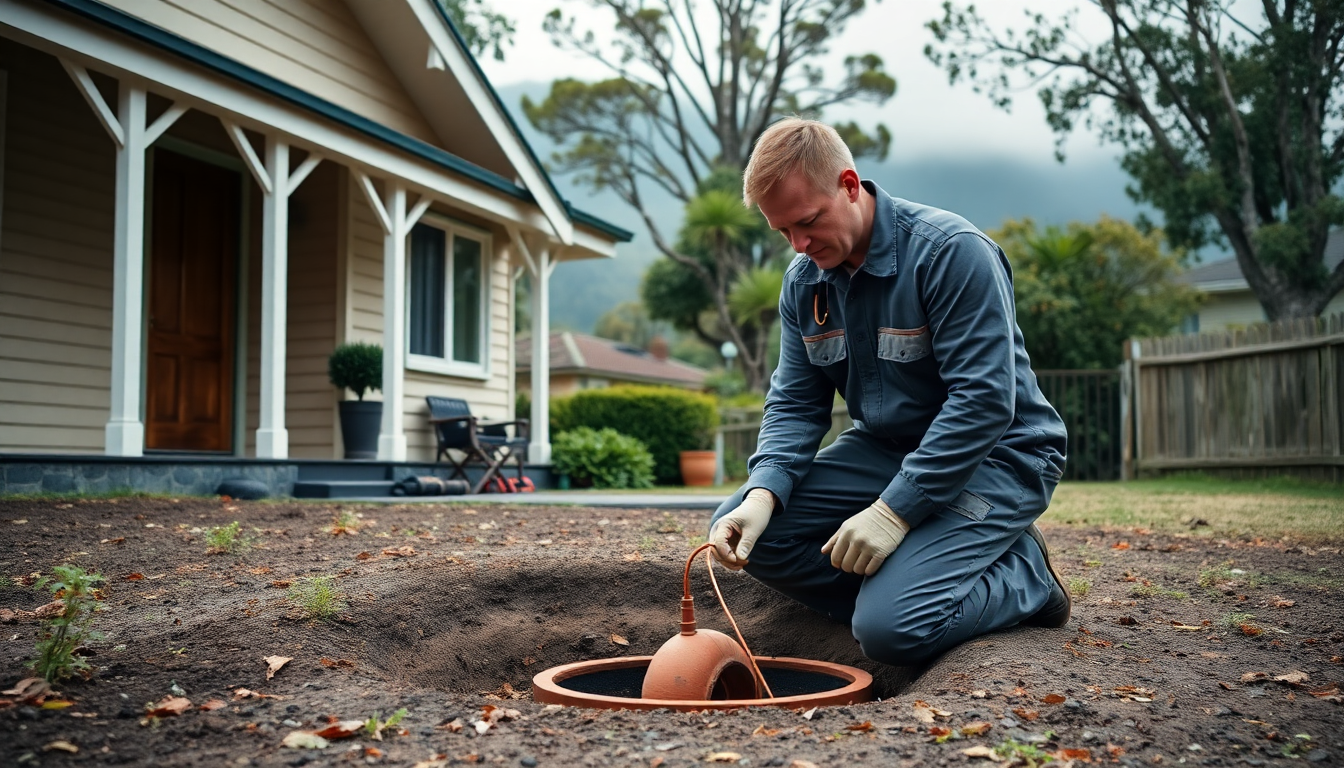
If your Katoomba home was built before the 1970s, the drains running out to the street are almost certainly clay, and clay is exactly what tree roots go hunting for. That's the short version of why we get called out to so many blocked drains in Katoomba, particularly through the wet stretch from late autumn into winter when the ground is saturated and the big old gums, liquidambars and camphor laurels are drinking hard. The tree doesn't care that the pipe is buried. It just follows the moisture and the nutrients, and a slightly leaky clay joint is a dinner invitation.
We've been working the mountains and the Penrith side of the range since the mid-nineties, and the pattern barely changes. The newer estates down the hill give us the odd wet-wipe or grease blockage. Up in Katoomba, Leura and Blackheath, it's roots nine times out of ten. The housing stock is older, the gardens are established, and the drainage was laid back when clay pipes in short sections were simply how it was done.
Why Blocked Drains In Katoomba Hit Older Homes Harder
Clay pipe isn't laid as one continuous run. It comes in lengths, joined every 600mm or so, and those joints were originally sealed with mortar or a rubber ring that has had fifty, sixty, sometimes ninety years to shift. Add the freeze-and-thaw the upper mountains get through winter, a bit of ground movement on a sloping block, and the joints open up just enough. A hairline gap is all a root needs. Once it's in, it fans out into a mat inside the pipe, catches everything that comes down, toilet paper, food scraps, soap scum, and what started as a slow drain becomes a full stop.
The tell-tale signs are pretty consistent. A toilet that gurgles when the washing machine drains. A shower that takes longer and longer to clear. A gully trap in the backyard that overflows after heavy rain. If you've got a couple of those happening at once, it's usually not the fixture, it's the main line out to the street, and the blockage is somewhere between the house and the boundary.
Tree Roots And Clay Pipes: The Usual Suspects
People often assume they've done something wrong, flushed the wrong thing, tipped fat down the sink. Sometimes that's part of it. But in an older Katoomba home, the honest answer is usually that the pipe was always going to fail at the joints eventually, and the tree in the front yard just got there first. We're not saying that to let anyone off the hook; we're saying it so you don't spend money chasing the wrong cause. Pouring drain cleaner down a root-blocked clay line does almost nothing. It might buy you a week.
There's a good rundown of the everyday habits that genuinely help, what to keep out of the drain, what to keep an eye on, in our guide on how to prevent blocked drains, and most of it holds true whether your pipes are clay or modern PVC. Prevention won't stop roots on its own, but it stops you adding to the problem.
How We Actually Find The Blockage
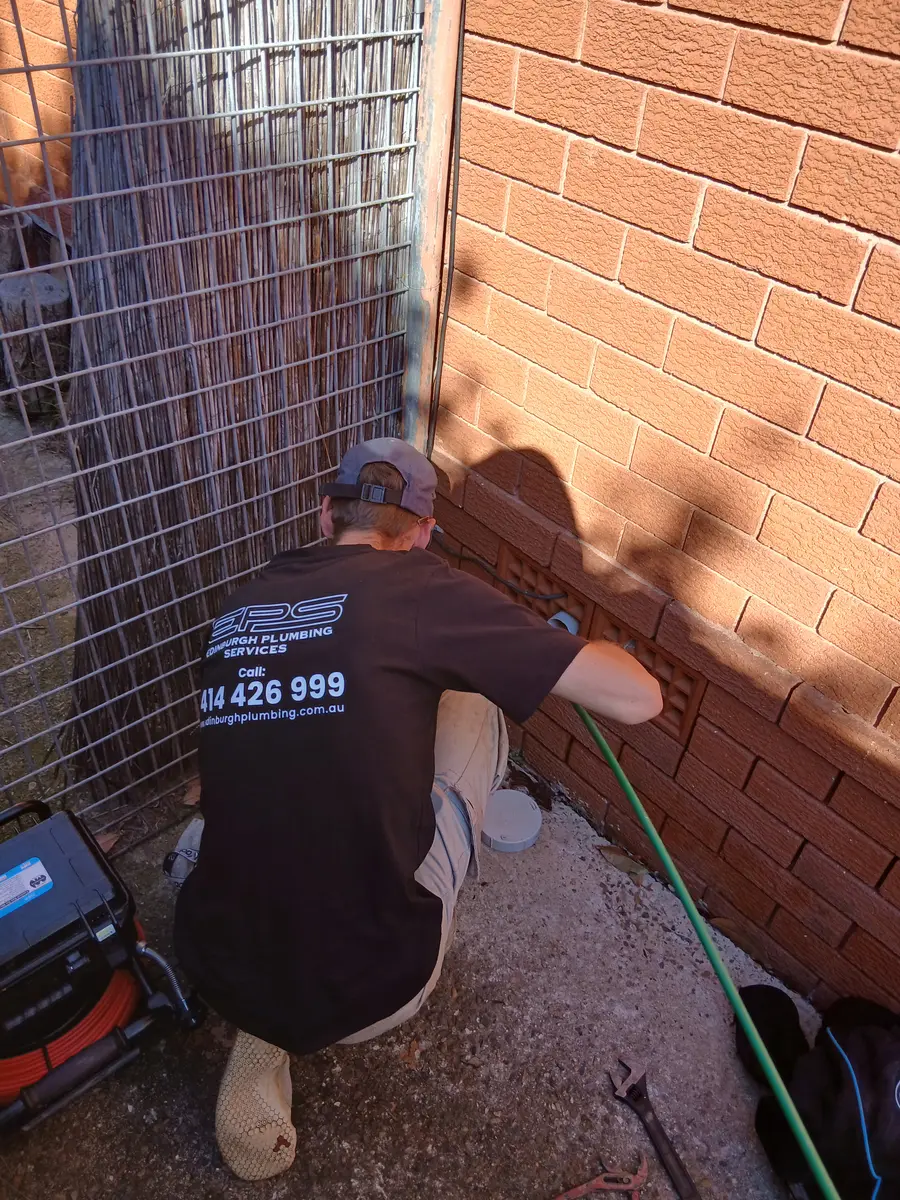
This is where guesswork ends. Rather than digging up your yard on a hunch, we run a CCTV drain camera down the line. It's a small waterproof camera on a flexible rod, and it sends live vision back so we can see exactly what's going on inside the pipe, where the root mass is, how bad it is, whether the pipe is cracked, collapsed or just partially blocked, and how far along the run the trouble sits. On a sloping mountains block, knowing the precise spot and depth before anyone lifts a shovel saves you real money.
The camera also tells us whether jetting will fix it for a good while or whether the pipe is too far gone and a section genuinely needs replacing. We'd rather give you that straight than clear it, take the money, and have you ring us again in a month. If it's a repair, you'll see the footage yourself.
Clearing It Properly With High-Pressure Jetting
Once we know what we're dealing with, high-pressure water jetting is the tool for the job on root-blocked drains. A specialised nozzle feeds down the line and cuts the roots out with water pressure alone, no harsh chemicals going into the mountains catchment. It scours the pipe walls back close to clean, which matters, because a rod or an electric eel might punch a hole through the blockage and get things flowing again, but it leaves the root mat behind to grow straight back. Jetting clears the lot.
On a badly rooted line we'll often camera it again afterwards to confirm it's actually clean, and to check the condition of the pipe now that we can see the walls. If the drain sits in the mountains catchment, keeping chemicals out of the stormwater and sewer system isn't just good practice, Sydney Water has clear rules about what's allowed down the drain, and jetting keeps you well on the right side of them (see sydneywater.com.au). You can read more about how we approach the whole process on our blocked drains service page.
What This Means If You're In An Older Home
If you're in Katoomba or one of the older pockets nearby and your drains are getting slower each season, it's worth getting a camera down the line before it backs up into the house at the worst possible time, usually a wet weekend. Roots grow back; that's just their nature. But once we've seen the inside of your line, we can tell you honestly whether you're looking at a yearly jetting cut to stay ahead of it, or whether it's time to budget for replacing a bad section. Either way, you'll know what you're dealing with instead of guessing.
We're a licensed, family-owned business that's been at this since 1996 (licence number 484292C), and blocked drains in the older mountains suburbs are genuinely our bread and butter. We know the housing stock, we know the trees, and we know what's under the ground up here.
If your drain's slow, gurgling, or already backed up, give us a call. For emergencies any hour, day or night, ring our 24/7 line on 0449 505 191. For general enquiries and bookings, call 0414 426 999. And if you'd like it in writing first, head to our contact page and ask for a free quote, we'll get someone out to you.
Frequently asked questions
How do I know if tree roots are blocking my Katoomba drain?
The classic signs are multiple slow fixtures at once, a toilet that gurgles when other water drains, and a backyard gully trap that overflows after rain. In older Katoomba homes with clay pipes, roots are the most common cause. A CCTV camera down the line confirms it for certain.
Will drain cleaner fix a root-blocked drain?
Not really. Chemical drain cleaners do little against a root mat in a clay pipe and can push nutrient-rich water into the mountains catchment. High-pressure jetting cuts the roots out properly with water alone, which is why we use it on root blockages.
Do I need to replace my clay pipes or can they be cleared?
It depends on the pipe's condition, which is exactly what the CCTV camera shows us. Many lines just need a yearly jetting cut to stay ahead of roots. If a section is cracked or collapsed, we'll show you the footage and give you an honest call on repair versus replacement.
Do you cover Leura and Blackheath as well as Katoomba?
Yes. We work right across the Blue Mountains, Penrith and Western Sydney, including Katoomba, Leura, Blackheath and the surrounding suburbs. Call 0449 505 191 for emergencies or 0414 426 999 for general bookings.
Need a plumber?
Whether it’s a quick fix or a bigger job, our licensed Penrith team can help with blocked drains across Western Sydney and the Blue Mountains.